Organize Philosophy notes as a network of arguments
Philosophy notes become easier to use when they are organized around problems rather than isolated thinkers.
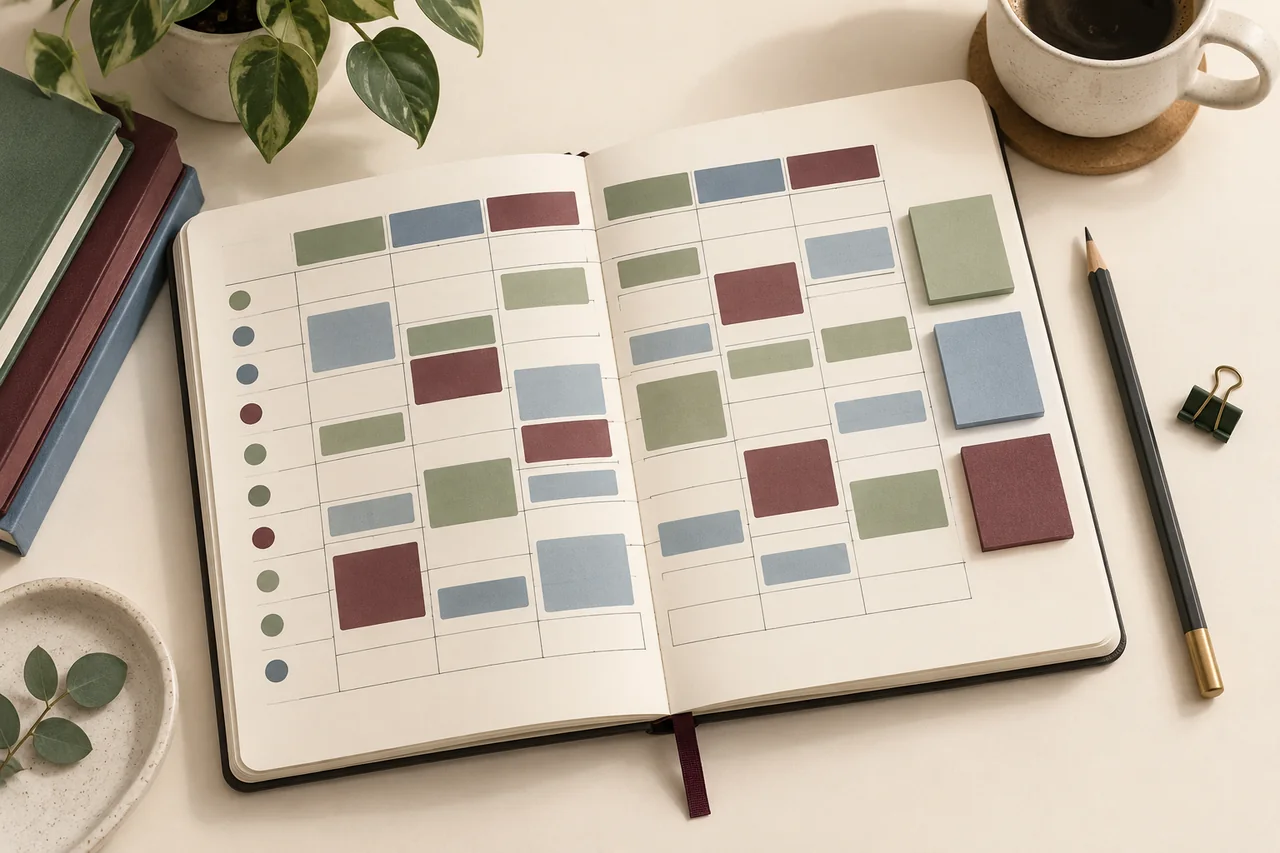
Make questions the centre of your notes
Philosophy notes become easier to use when they are organized around problems rather than isolated thinkers. Choose a question from your taught course and write down why it is difficult. Identify the concepts whose meanings matter and the competing positions you have studied. This gives each reading a purpose. A thinker can then appear in several relevant debates, instead of being confined to one page of biographical facts and memorable quotations.
Build a position-and-reason map
For each position, record its central claim, supporting reasons and assumptions. Put a short example beside the reasoning if it clarifies the issue. Keep references to the studied text so you can verify your summary. Distinguish the author's argument from a classroom interpretation or your own extension. Where two positions disagree, draw the connection and state the precise point of disagreement. Their conclusions may differ because they define the problem differently.
Read the prescribed text closely
Work through a short passage by identifying what the author is trying to establish and how the reasoning develops. Paraphrase difficult sentences before deciding whether you agree. Look for qualifications that a simplified summary might omit. A text may distinguish kinds of freedom, knowledge or identity rather than defend one unqualified claim. Preserve those distinctions in your map, because they often determine whether an objection is relevant and fair.
Try an identity map
Imagine a debate about whether personal identity depends on memory. One position links identity to psychological continuity. An objection asks what happens when a person forgets an experience. A reply could distinguish direct recollection from broader continuity through overlapping connections. Your map should show this movement in the argument. A page that says memory theory has strengths and weaknesses tells you far less about what the position claims or how it might be defended.
Add your judgment carefully
Write a provisional view after reconstructing and testing the positions. Explain which reason you find strongest, what objection remains and how far your conclusion extends. Changing your view as you read is part of inquiry. Keep dated notes of important revisions rather than replacing them with a polished final opinion. This helps you see whether a change came from better evidence, a clearer concept or a stronger counterargument.
Use the map for different tasks
Turn the same map into a short explanation, a paragraph responding to a stimulus and an essay plan. Each task requires selecting rather than copying the whole network. Ask which arguments resolve this particular question and leave out attractive but irrelevant material. Review your map after teacher feedback, especially where a position was oversimplified. A useful course notebook records relationships between ideas and gives you a reliable route back to the reasoning in the text.
Keep definitions next to the arguments that need them. If two thinkers use the same word differently, show both meanings. This prevents a comparison from treating a verbal difference as a substantive contradiction or overlooking a disagreement hidden behind shared terminology.
Your next-step checklist
Checklist choices stay in this browser.
Official references
This is an original practical guide from IBvia. The examples are illustrative; your subject guide, assessment year and school instructions determine the requirements.
Keep working on your next step

Read ethnography through context, concepts and reflexivity
An ethnography offers more than interesting details about a community.
Read the guide ↗
Map the Economics course through connected questions
An Economics course map should reflect the content and assessment guidance your school provides for your examination session.
Read the guide ↗