Build a DP1 study system you can keep using
A practical weekly routine for lessons, independent practice and the first steps of longer IB projects.
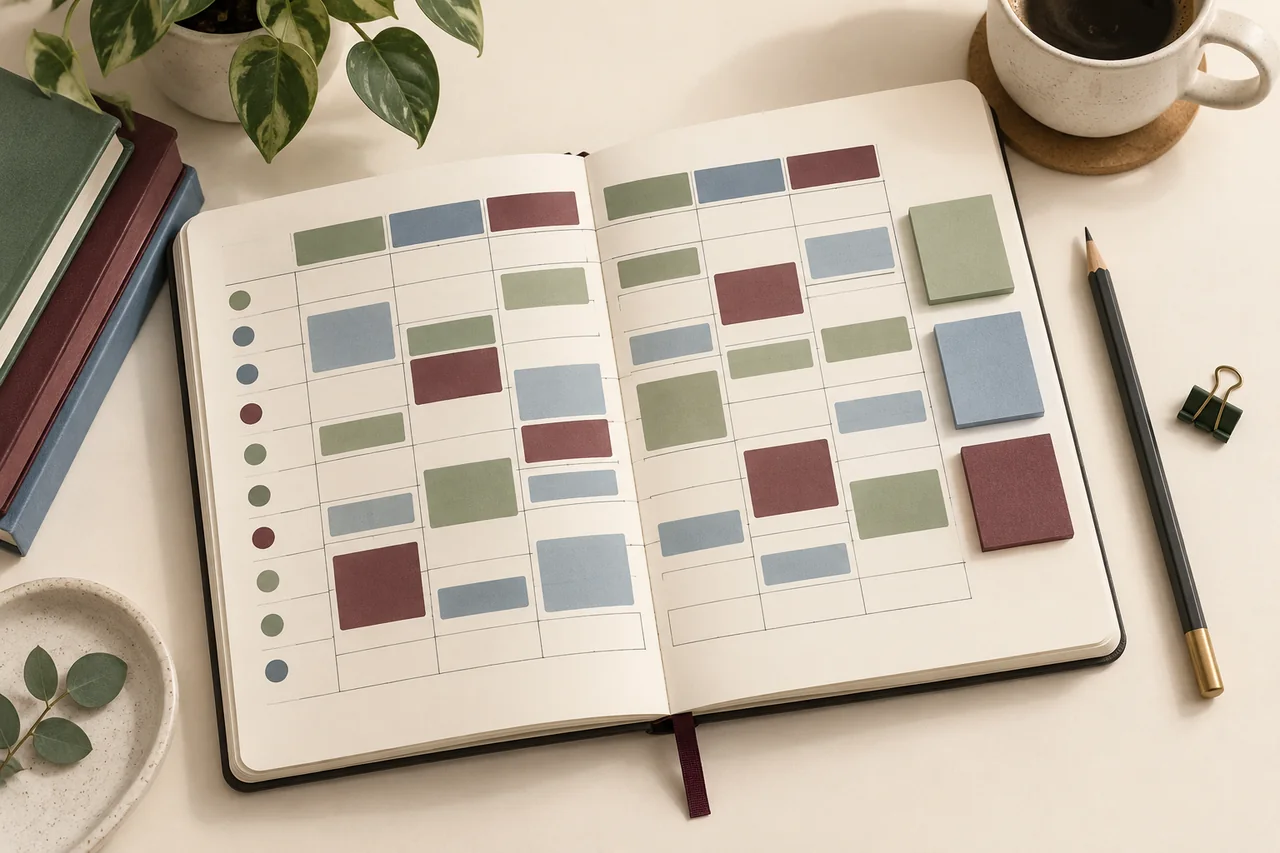
Start with the work you actually have
The Diploma Programme combines subject study with TOK, the extended essay and CAS. Your system needs a place for each commitment, even before the major submissions feel urgent. Create one calendar for fixed dates and one task list for actions. Enter school deadlines, lesson preparation, activities and appointments first. Keep the tools simple enough to check every day.
For each subject, keep three things together: the course outline supplied by your teacher, current class materials and a short list of questions you cannot yet answer. This gives you a useful starting point when you sit down to study.
Plan outputs instead of vague study time
Replace 'revise chemistry' with an action you can finish and inspect: explain a concept from memory, attempt four unfamiliar questions, or correct last week's calculation. Write the output beside the time block. Start with a small number of blocks that fit around your existing week, then increase only when the routine is working.
A task that repeatedly overruns may contain several tasks. Separate learning the method, practising it and checking the result. Put the next visible action on your list so you can resume without rebuilding the plan.
Use a lesson-to-practice loop
After a lesson, spend a short session identifying its central idea and testing whether you can explain it with your notes closed. Then compare your explanation with your class materials. Record the gap precisely. 'I cannot explain why the curve shifts' is more useful than 'economics is difficult.'
Later in the week, try a new question that requires the same idea. Keep enough working to diagnose mistakes. A correct answer reached through a confused method is still a reason to practise. Bring persistent questions to your teacher with your attempted reasoning attached.
Try a realistic example week
Here is an illustrative routine to adapt, rather than a required IB schedule. On Monday, use twenty minutes to reconstruct the main ideas from mathematics. On Wednesday, work through a short science question set and check the reasoning. On Friday, plan one humanities paragraph using evidence from class. At the weekend, review mistakes and reserve one longer block for a project.
If an unexpected commitment removes Wednesday's block, move the specific question set into the next available slot. Avoid treating the missed session as a debt that requires an exhausting catch-up evening.
Keep projects moving in small steps
A long project needs evidence of progress before it needs polished prose. Early actions might include checking whether a dataset is accessible, reading one relevant source, recording an interesting question or testing a measurement method. Store source details when you first use them. Distinguish quotations, your paraphrases and your own ideas in your notes.
- Choose one project action with a concrete result each week.
- Record questions for your teacher or supervisor as they arise.
- Keep dated drafts and research notes in a consistent folder.
Review the system, not just your effort
At the end of the week, ask what you completed, what helped you understand and what blocked progress. Adjust one part of the routine. If you spent hours rewriting notes but could not answer questions, move some time into practice. If the plan was too full, reduce it to the tasks with the clearest learning value. A useful system produces information you can act on.
Your next-step checklist
Checklist choices stay in this browser.
Official references
This is an original practical guide from IBvia. The examples are illustrative; your subject guide, assessment year and school instructions determine the requirements.
Keep working on your next step

Turn DP2 deadlines into a workable plan
Work backwards from your school's dates, spot dependencies and protect time for revisions and exams.
Read the guide ↗
Turn teacher feedback into visible revisions
Translate comments into actions, repair the reasoning first and verify that the revised draft solves the problem.
Read the guide ↗